
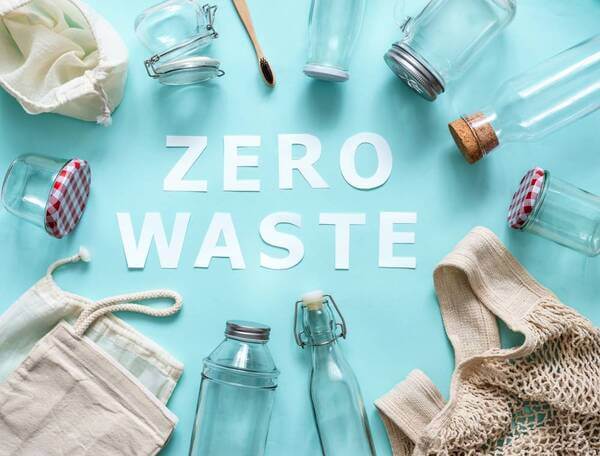
The zero-waste lifestyle has emerged as one of the most provocative responses to a world drowning in excess. What began as a countercultural experiment—limiting personal trash to a single jar—has evolved into a global conversation about redesigning entire systems of production, packaging, and consumption. As cities confront overflowing landfills and corporations face mounting pressure to reduce environmental footprints, zero waste has shifted from moral aspiration to strategic imperative. It asks a radical question: What if waste were no longer a default outcome of modern life? Untangling this idea reveals a deeper story of innovation, economic tension, and cultural transformation.
A Structured Chronology: The Evolution of Zero Waste
1. Origins (1960s–1980s)
- The term “zero waste” first appeared in industrial engineering, not environmental activism.
- Early manufacturing thinkers explored “closed-loop” production to recover materials and cut costs.
- As landfills expanded rapidly in the 1970s, environmentalists began discussing waste minimization in community systems.
2. Transformation into a Lifestyle Movement (1990s–2010)
- Municipalities in New Zealand and California adopted “zero-waste goals.”
- Activists like Bea Johnson popularized the lifestyle by demonstrating family-level waste elimination.
- Blogs, community groups, and early YouTube education fueled global adoption.
3. Integration Into Policy and Corporate Strategy (2010–2020)
- The circular economy framework matured, influencing European Union directives.
- Multinationals adopted zero-waste-to-landfill targets.
- Cities, from San Francisco to Seoul, used policy levers—such as mandatory composting and plastic bans.
4. The Next Phase (2020–present)
- Digitized waste tracking and material recovery innovations accelerated.
- Community repair hubs, refill networks, and extended producer responsibility (EPR) policies expanded worldwide.
- Zero waste is now discussed not only as a personal ethic but as a systemic redesign challenge.
Deep Technical and Conceptual Explanation
The zero-waste lifestyle aims to eliminate landfill-bound trash by designing consumption around circularity. It is built on five core principles:
1. Refuse
Decline unnecessary packaging, single-use items, and impulse purchases.
2. Reduce
Minimize overall resource consumption and prioritize efficiency.
3. Reuse
Prefer durable materials, refillable systems, and repair practices.
4. Recycle
Use recycling as a last resort rather than a default, acknowledging its limitations.
5. Rot (Compost)
Convert organic waste back into nutrient cycles.
Underpinning these principles is systems thinking, which models every product as part of a material loop—from raw extraction to end-of-life recovery. The aim is not individual perfection but engineered ecosystems where waste simply cannot accumulate.
Environmental, Economic, Social & Cultural Impacts
Environmental
- Reduced landfill methane emissions
- Lower demand for raw material extraction
- Improved soil and biodiversity through composting
- Decreased ocean-bound plastics
Economic
- Growth in reuse-based business models (refill stores, repair cafés)
- Cost savings for municipalities with optimized waste streams
- Corporate shifts toward recyclable or refillable packaging
- New green job sectors: waste auditing, circular logistics, material innovation
Social
- Stronger community networks built around repair, sharing, and bartering
- Increased consumer awareness of product lifecycles
- Equity challenges: low-income regions may lack access to zero-waste infrastructure
Cultural
- Reframing “minimalism” as responsible consumption rather than aesthetic choice
- Consumer identity tied to sustainability performance
- Shifting norms around convenience, disposability, and status
How Zero Waste Works in Real Life
Individual-Level Implementation
- Refilling household goods at zero-waste stores
- Replacing disposable products with durable alternatives
- Composting organic waste
- Participating in repair cafés and swap communities
Community and System-Level Implementation
- Municipal composting and recycling hubs
- Deposit-return schemes for bottles and packaging
- Urban refill networks
- Extended producer responsibility regulations
- Corporate zero-waste supply chain auditing
These layers must work together; personal choices alone cannot offset systemic inefficiencies. Zero waste succeeds only when infrastructure, policy, and consumer behavior align.
Comparative Table: Traditional System vs Zero-Waste System
| Category | Traditional Consumption System | Zero-Waste Lifestyle/System |
| Product Design | Linear; planned obsolescence | Circular; repairable and durable |
| Packaging | Single-use plastics | Refillable, compostable, or reusable |
| Consumer Behavior | Convenience-focused | Intentional, minimal, long-term |
| Material Flow | Take → Make → Dispose | Recover → Reuse → Regenerate |
| Waste Output | High landfill dependency | Minimal or no landfill waste |
| Cost Over Time | Higher due to repeated purchases | Lower due to reuse/repair |
| Environmental Impact | High emissions & pollution | Low emissions, lower footprint |
Timeline Table: Decade-by-Decade Evolution
| Decade | Milestones in Zero-Waste Evolution |
| 1960s–70s | Early closed-loop industrial theories; recycling awareness grows |
| 1980s | First municipal recycling programs; anti-landfill activism |
| 1990s | Term “zero waste” enters policy language; pilot cities adopt goals |
| 2000s | Lifestyle movement spreads via early blogs and activist communities |
| 2010s | Corporate zero-waste initiatives emerge; global plastic crisis escalates |
| 2020s | Digital waste tracking, AI-based sorting, refill tech expand |
Expert Perspectives and Analytical Insights
Industrial Designers:
Argue that 80% of a product’s environmental impact is determined in the design phase. Zero waste requires rethinking material selection, modularity, and end-of-life recovery.
Economists:
Highlight the tension between circularity and growth-based economic models. While zero waste reduces environmental cost, it challenges industries built on constant consumption.
Urban Policy Specialists:
Stress that infrastructure—composting facilities, refill networks, incentives—is the make-or-break factor. Without municipal support, consumer-driven zero waste stalls.
Environmental Scientists:
Point to lifecycle analyses showing that reuse models outperform recycling by wide margins, especially for plastics and textiles.
Sociologists:
Warn that zero waste must avoid becoming an elitist lifestyle and instead offer equitable, accessible pathways for all communities.
Challenges, Limitations & Structural Barriers
- Infrastructure gaps in cities lacking composting or refill services
- Economic dependency on disposable goods industries
- Behavioral friction—convenience often outweighs sustainability
- Corporate greenwashing diminishing consumer trust
- Unequal access in low-income regions
- Recycling inefficiencies, especially for mixed plastics
- Policy lag relative to consumer expectations and environmental urgency
Zero waste is not a simple solution; it is a multi-layered systems challenge requiring coordinated innovation.
Future Innovations and Next-Generation Models
- AI-powered sorting facilities enabling near-perfect material recovery
- Smart packaging with embedded markers for automated reuse logistics
- Refill-at-home appliances integrated into kitchens and bathrooms
- Bio-based materials that compost safely in natural environments
- Blockchain for waste tracking across corporate supply chains
- Urban mining hubs extracting valuable metals from electronic waste
- Subscription-based reuse ecosystems replacing single-purchase models
As cities move toward climate-neutral strategies, zero waste becomes a foundational component of urban planning.
Key Takeaways
- Zero waste is both a lifestyle and a systemic redesign of consumption.
- Its roots lie in industrial efficiency and environmental activism.
- The movement now influences policy, corporate strategy, and cultural norms.
- Infrastructure remains the largest barrier to widespread adoption.
- Circular design principles are crucial for reducing waste upstream.
- Economic incentives can accelerate adoption across industries.
- Digital innovations will shape the next generation of zero-waste systems.
- The future of waste is not management—it is elimination through better design.
Conclusion: The Future Relevance of Zero Waste
The zero-waste lifestyle signals a deeper shift in how societies understand responsibility, consumption, and value. What began as a personal experiment now shapes global policy, corporate innovation, and urban planning. As climate pressures intensify and resource scarcity becomes a defining economic reality, the mindset behind zero waste—designing systems where nothing is truly discarded—may become essential rather than aspirational. Its future relevance lies not in individual perfection, but in collective reengineering of modern life. Zero waste is no longer a niche movement; it is an early blueprint for a sustainable civilization.
FAQ
1. Is zero waste achievable in modern cities?
Not perfectly, but significant reductions are possible with proper infrastructure and community participation.
2. Does zero waste cost more?
Initial shifts may cost more, but long-term savings occur through reuse and reduced consumption.
3. Is recycling enough?
No. Recycling is energy-intensive and limited; zero waste emphasizes reduction and reuse first.
4. What is the biggest barrier to zero waste?
Lack of municipal infrastructure and corporate accountability.
5. Can businesses adopt zero waste profitably?
Yes—through reuse logistics, packaging redesign, and circular revenue models.
References & Further Reading
- United Nations Environment Programme (UNEP), International Solid Waste Association (ISWA), Global Waste Management Outlook 2024: Beyond an Age of Waste – Turning Rubbish into a Resource. Available online: https://wedocs.unep.org/20.500.11822/44939 wedocs.unep.org+2UNEP – UN Environment Programme+2
- Ellen MacArthur Foundation, “Eliminate waste and pollution” (explaining circular-economy and design principles). Available online: https://www.ellenmacarthurfoundation.org/eliminate-waste-and-pollution Ellen MacArthur Foundation
- United Nations Development Programme (UNDP), “Circular Economy” — overview of circular economy benefits, waste & resource management strategies. Available online: https://www.undp.org/chemicals-waste/our-work/circular-economy UNDP
- United States Environmental Protection Agency (EPA), “What is a Circular Economy?” — definition and explanation of how circularity relates to sustainable materials management. Available online: https://www.epa.gov/recyclingstrategy/what-circular-economy EPA
- Field Actions Science Reports, “Circular economy: strategies and policies” (2021) — analysis of circular-economy strategies, policy implications and case studies. Available online: https://journals.openedition.org/factsreports/6515 OpenEdition Journals
- How circular is the linear economy? Analysing circularity, resource flows and their relation to GDP — 2025 academic analysis of circular economy metrics, resource flows, and the gap between recycling-centric and value-retention-centric circular practices. arXiv preprint. Available online: https://arxiv.org/abs/2505.13048 arxiv.org