
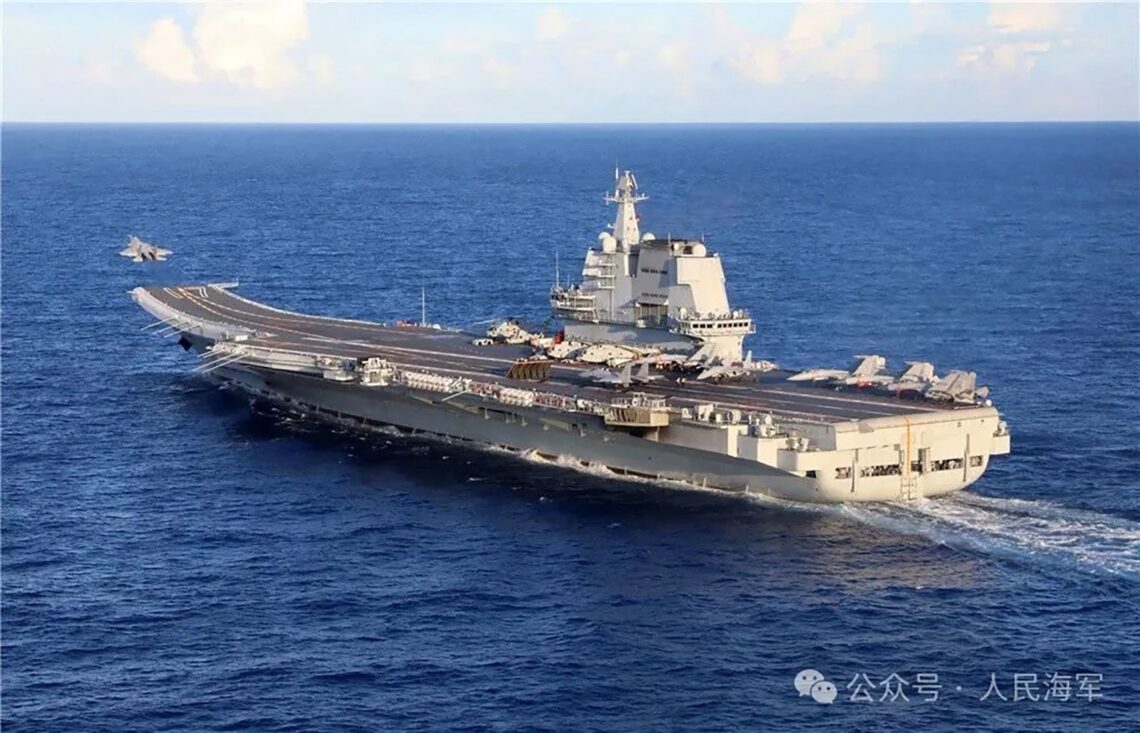
The salt-tinged breeze off People’s Liberation Army Navy (PLAN) base at Sanya stirred the taut flags atop a massive grey hull. Below decks, engineers monitored humming circuits of a new electromagnetic catapult; above, gulls wheeled lazily under a sanding-pink sunrise. The air was heavy with expectation — and something darker: resolve. As the sea whispered against steel, a new chapter in China’s naval story was quietly, inexorably being written.
With 2025 marking the formal commissioning of the third Chinese carrier Fujian, the clang of rivets and the swell of diesel engines echo not just across china’s shipyards but across the Pacific. What was once an aspiration — a dream of blue-water reach — has become a resolute push toward maritime influence. The growing carrier fleet is not merely hardware; it’s ambition embodied in tonnage and catapults, a statement of power and a signpost for the future.
Origins: From Soviet Hull to National Vanguard
The story of China’s aircraft-carrier journey begins with adaptation, aspiration, and a keen strategic eye. In the late 1990s, Beijing acquired a partially completed carrier hull, formerly the Soviet (and later Ukrainian) vessel Varyag, under the guise of a “floating casino.” Towed to Dalian shipyard, the shell was dormant — incomplete — yet dream-laden. Over years of meticulous refurbishment and retrofitting, the hull was transformed into the PLAN’s first carrier, christened Liaoning, which was commissioned in 2012. Wikipedia+2Wikipedia+2
Liaoning served largely as a training platform initially. Over subsequent years, night-landing drills, carrier deck-handling exercises, and incremental upgrades built the foundation of China’s aircraft-carrier doctrine. By 2016–2018, the Liaoning had begun demonstrating operational capabilities, including participating in live-fire drills in contested waters such as the South China Sea. Wikipedia+1
Learning from that experience, Chinese shipbuilders embarked on a native design — giving birth to the second carrier, Shandong (Type 002). Commissioned in 2019, it represented a clear shift: no longer a rebuild, but a carrier conceived, built, and deployed under Chinese design philosophy. Wikipedia+2Ministry of Defense China+2
Yet the ambition didn’t stop there. By the early 2020s, shipyards had begun assembling what would become the third carrier — Fujian (Type 003), the first built entirely domestically and fitted with modern electromagnetic catapult systems. Launched in June 2022, Fujian entered sea trials in 2024 and, in November 2025, was officially commissioned into active service. Wikipedia+2Naval News+2
This evolution — from retrofitted hull to purpose-built carrier with cutting-edge technology — mirrors China’s broader transformation: industrial, naval, and strategic.
Modern Significance: From Training Deck to Power Projection
The formal induction of Fujian into the PLAN fleet marks more than just an addition to numbers. It signals a shift from training-oriented carriers to instruments of real power projection. Analysts underscore that China now stands only behind the United States in carrier count — a fact loaded with geostrategic implications. The Guardian+2Wikipedia+2
Fujian’s electromagnetic catapult system (CATOBAR), combined with a tonnage around 80,000–85,000 tons, gives it the capability to launch heavier, more capable aircraft than earlier carriers. It can carry over 50 aircraft — including fighters, airborne early-warning planes, and helicopters — enabling the PLAN to conduct sustained operations far from its shores. India Today+2Wikipedia+2
Moreover, the presence of multiple carriers allows for rotation, maintenance cycles, and training: some ships can remain on patrol while others undergo upkeep or crew training. This represents a major capacity upgrade — from a single-train/test vessel to a multi-carrier navy capable of simultaneous deployment. The Diplomat+2militarnews.com+2
In a broader sense, the rising fleet serves as a symbol — of technological competence, industrial maturation, and strategic confidence. For Beijing, it offers leverage: in sea-lanes, in diplomatic calculus, and in contested maritime zones such as the South China Sea and Taiwan Strait.
Geographic Context: Where China’s Carriers Make Waves
Seas, Straits and Strategic Zones
China’s aircraft-carrier operations are concentrated in strategically sensitive waters: the South China Sea, East China Sea, and the broader Western Pacific — including areas surrounding Taiwan, contested islands, and international sea lanes. Carriers provide mobility, flexibility, and reach, enabling China to project air power far beyond its immediate coastline. The Diplomat+2The Diplomat+2
Particularly, ports such as Sanya (on Hainan Island) serve as home bases and logistical hubs for carrier maintenance and resupply. Satellite imagery indicates significant infrastructure buildup to support large carriers, including deep berths and supply terminals. The Diplomat+1
At sea, the carriers traverse a wide operational envelope: from the shallow, reef-lined shoals of the South China Sea to the long stretches of open Pacific, offering strategic depth and reach.
Strategic Geography: First and Second Island Chains
China’s carrier strategy is deeply tied to the concept of the First and Second Island Chains — geographical belts of islands and territories that bracket China’s maritime periphery. With a multi-carrier fleet, the PLAN seeks to operate near or beyond these island chains, extending its air and naval influence deep into the Western Pacific. The Diplomat+1
This capability alters regional dynamics: nations within or adjacent to these chains must recalibrate their naval and air-defense postures in response.
Styles and Variations: From Ski-Jumps to Catapults
China’s carriers reflect an evolution of launch methods, sizes, and operational philosophies.
- STOBAR (Short Take-Off But Arrested Recovery) — used by Liaoning and Shandong. These carriers rely on ski-jump ramps and arrester wires for takeoff and landing, limiting aircraft weight and payload. Liaoning (~60,000 tons) and Shandong (~70,000 tons) can host roughly 40–45 aircraft. militarnews.com+2Wikipedia+2
- CATOBAR (Catapult Assisted Take-Off But Arrested Recovery) — introduced with Fujian (Type 003). This allows heavier aircraft, larger payloads, and safer launch under varied weather or sea conditions. With a displacement of ~80,000 tons and capacity for 50+ aircraft, Fujian signals China’s intent to match global carrier standards. Wikipedia+2Wikipedia+2
- Planned Advanced Designs — beyond Fujian, China is reportedly working on a new class, Type 004 aircraft carrier, potentially its first nuclear-powered carrier, aiming for longer endurance and greater global reach. Wikipedia+2Wikipedia+2
These variations reflect a learning curve: starting with foreign design adaptation, moving to indigenous builds, and now aspiring toward full-fledged blue-water, long-range capability.
Cultural and Geopolitical Impact: Steel, Symbolism, and Strategy
The rapid maturation of China’s carrier program is not just a technical achievement — it embodies broader shifts in identity, self-perception, and geopolitical posture.
Within China: National Pride and Industrial Confidence
For many Chinese, the carriers are a testament to national revival and technological prowess. The transition from refurbished hulls to home-designed, catapult-equipped carriers aligns with a wider narrative of “China rising” — asserting itself as a maritime power after centuries of land-centric history. Reviews in state media, official speeches at commissioning ceremonies, and public fascination with carrier jets all feed into a narrative of pride. Ministry of Defense China+2India Today+2
The industrial capacity to build such vessels — from shipyards to power systems to complex aviation integration — demonstrates a maturing military-industrial base and confidence in long-term strategic investment.
Regionally: Strategic Shockwaves and Security Calculus
Across Asia and the Western Pacific, Fujian’s commissioning rippled through capitals, military think-tanks, and media. For neighbors and rivals — especially those involved in disputed seas or islands — China’s new fleet raises the stakes. It changes threat perceptions, forces modernization drive, and may incentivize alliances, anti-access systems, and maritime deterrents. The Diplomat+2militarnews.com+2
In this sense, carriers become more than naval assets; they are geopolitical tools — statements of reach, readiness, and intent.
Table 1 – Popular Carrier Deployments and Their Signatures
| Carrier / Deployment Zone | Defining Features | Experience / Role Type |
| South China Sea (Shandong / Liaoning patrols) | Strategic proximity to contested islands, shallow seas, frequent patrols | Deterrence, presence patrols, sovereignty assertion |
| East China Sea / Taiwan Strait (Fujian potential deployment) | High-tension zone, proximity to Taiwan and First Island Chain | Rapid-response posture, air-power projection, blockade capability |
| Western Pacific / Open Ocean (Long-range sorties) | Blue-water operations, open seas, extended logistics | Power projection, training for multi-carrier operations |
| Hainan / Sanya Naval Base (Home port & maintenance hub) | Deep water port, logistic support infrastructure | Docking, resupply, crew rotation, maintenance & training |
| Northern Fleet Potential Corridor (Future Type 004 routes) | Far seas, long endurance routes, potential nuclear-powered carrier deployment | Strategic global reach, second-theater operations, global presence |
Practical Realities: Crews, Logistics, and the Road Ahead
Building carriers is one thing; operating them is another. The step from sea-trials to fully functional carrier strike groups is nontrivial.
As reported, even after Fujian’s formal commissioning, the vessel requires continued testing, crew training, aviation integration, and support-ship coordination before achieving full operational capability. Naval News+2The Diplomat+2
Logistics — fuel, munitions, supply chains, repair facilities — must be robust and globally deployable. Moreover, holding and deploying a multi-carrier fleet demands not only ships but well-trained crews, effective maintenance infrastructure, and a doctrine matured through exercises.
Furthermore, environmental and regional factors — sea conditions, monsoons, navigation through narrow straits — may impose operational constraints. China’s navy will need to temper ambition with realism.
Global Comparisons: How China Measures Against Other Carrier Navies
| Feature | China (PLAN) | United States Navy (USN) | Other Carrier Navies (e.g. UK, France, India) |
| Mood / Strategic Focus | Rapid buildup, regional dominance, blue-water aspiration | Global reach, power projection, sustained presence | Regional defence, power projection, moderate reach |
| Common Carrier Type | Hybrid: STOBAR (older), CATOBAR (new) | CATOBAR, nuclear-powered supercarriers | Ski-jump (STOBAR) or CATOBAR (limited) |
| Fleet Size (2025) | 3 active, more planned | ~11 active, long-established doctrine | Typically 1–3 carriers, limited tonnage & reach |
| Main Appeal | Regional influence, rapid expansion, symbolic power | Global maritime dominance, sustained presence, strike capability | Flexible deployment, regional naval balance, limited cost |
| Limitations | Experience, logistics infrastructure, conventional propulsion | High cost, aging ships, global commitments | Smaller air wings, limited endurance, less global reach |
Expert Insights: Voices From Within the PLAN
Setting: A dusky evening on the pier at Sanya Naval Base, November 2025. The silhouette of Fujian looms under floodlights. I sit across from Commander Zhang Lei, a veteran naval aviator, near the edge of the quay. The faint hum of generators vibrates through the air; the sea smells of diesel, salt, and steel.
Q: What are the biggest challenges ahead in making this fleet truly operational?
A: “Logistics and integration. Aircraft need maintenance, resupply, fuel. Support ships must be ready. The crews must be drilled. And — the sea is unforgiving. Weather, long distances, supply lines — those test you. Emotional burden too; long deployments, time away from home. But we know what is at stake.”
Q: On a human level, what does serving on a carrier mean to you and your sailors?
A: “Pride, responsibility, and a sense of mission. When the carrier moves, it carries hopes — not just ours, but many millions back home. Every take-off, every landing — those are not just maneuvers. They are commitments. To duty. To our nation.”
(Commander Zhang pauses, watches a wave lap at the hull, then adds quietly.) “I believe future sailors will not remember the stitch-by-stitch build — they will remember the projection. The world beyond our coasts.”
FAQs
Q: How many aircraft carriers does China have now (2025)?
A: As of late 2025, China’s PLAN operates three active carriers: Liaoning (Type 001), Shandong (Type 002), and Fujian (Type 003). Wikipedia+2Naval News+2
Q: What makes Fujian different from the earlier carriers?
A: Fujian is China’s first domestically designed and built carrier equipped with a CATOBAR (electromagnetic catapult) launch system — enabling heavier, more capable aircraft and greater operational flexibility compared to the ski-jump (STOBAR) carriers Liaoning and Shandong. Wikipedia+2Wikipedia+2
Q: Does China plan to build more carriers?
A: Yes. At least one more, the Type 004 carrier, is reportedly under construction and is believed to be the first Chinese nuclear-powered carrier, aiming for long-range, blue-water deployment. Analysts have projected China could have four to six carriers by 2030–2035. Wikipedia+2militarnews.com+2
Q: How does China’s carrier fleet compare with the United States?
A: While the US Navy still operates more carriers (about 11) and enjoys decades of operational experience and global logistics infrastructure, China’s carriers represent rapid expansion, regional strategic influence, and growing technical sophistication. China’s fleet remains more limited in global reach and operational depth but is closing the gap in carrier count. (See comparison table above.)
Q: What constraints remain for China’s carrier ambitions?
A: Key constraints include logistics capacity (fuel, munitions, replenishment), support-ship fleet size, crew training and experience, and operational doctrine. Additionally, because carriers like Fujian use conventional propulsion, their endurance and range remain limited compared to nuclear-powered carriers. militarnews.com+2The Diplomat+2
Global Comparison: Carriers, Navies, and Strategy
Carriers remain among the most potent—and expensive—symbols of maritime power. Historically, navies like the USN defined global naval dominance through nuclear-powered supercarriers, global deployment, and sustained presence far beyond home waters.
By contrast, many other navies—such as those of the United Kingdom, France, or India—operate fewer carriers, often limited by tonnage, aircraft capacity, and logistical footprint. Their roles tend toward regional defence, power projection within shared waters, or limited strike capability.
China’s current trajectory places it somewhere between these two paradigms. With carriers like Fujian — large, capable, and built domestically — China seeks regional dominance and a growing global footprint. But the fleet still lacks the worldwide logistical network, overseas bases, and years-long deployment cycles that define the US approach.
Nevertheless, the speed and scale of China’s growth — from zero operational carriers in 2010 to three by 2025 — is unprecedented in modern carrier history. If Type 004 and other future carriers come to fruition, China may offer a third model: a rising maritime power powered by industrial determination, regional ambition, and incremental but steady capability accumulation.
Challenges and Environmental / Strategic Impact
The expansion of China’s carrier fleet carries both strategic stakes and risks — for China, its neighbors, and the global maritime order.
- Regional tensions: Increased carrier presence heightens tensions in contested waters, especially around Taiwan, the South China Sea, and disputed islands. Such presence could accelerate naval build-ups, arms races, and security dilemmas among regional powers.
- Naval escalation and deterrence dynamics: Carriers bring mobility and flexibility; blockade, patrol, or strike missions become possible. This may spur countermeasures — anti-ship missiles, submarines, shore-based defenses — across Asia.
- Environmental costs: Large carriers — especially nuclear-powered ones planned for the future — have long-term ecological implications: fuel consumption, emissions, potential accidents. Even conventionally powered carriers require massive logistic support, which may strain marine ecosystems, port infrastructure, and coastal communities.
- Arms race pressure: Rapid naval modernization may divert resources from other critical sectors, and create a security spiral in which neighboring states feel compelled to respond, potentially destabilizing regional equilibrium.
Takeaways
- China’s aircraft-carrier program has evolved rapidly: from refurbished Soviet hulls to fully indigenous, catapult-equipped carriers, within just over a decade.
- The commissioning of Fujian in 2025 marks a pivotal shift: China is no longer testing the waters — it aims for sustained power projection.
- With three carriers in service, and more planned, China is closing the carrier count gap with traditional naval powers.
- Yet significant challenges remain: logistics, crew experience, support fleets, and global reach. Carriers are powerful but complex — their value rests not just in steel, but in integration, doctrine, and sustained commitment.
- Regionally and globally, China’s fleet alters strategic dynamics: deterrence, influence, and naval competition are poised to intensify.
Conclusion: An Emerging Maritime Identity, Sea-Change in Strategy
As dusk settled on Sanya harbor, the floodlights outlining Fujian glowed like a promise — a promise of presence, reach, and ambition. The clang of deck-plates, the distant roar of catapults, and the slow, deep breathing of engines beneath the waves tell a story of more than iron and fuel.
They tell of a nation seeking to define its place not just within continents, but across oceans. They speak of transformation — industrial, strategic, existential. For China, the growing aircraft-carrier fleet is not a vanity project: it is the forging of a maritime identity.
In the years ahead, as more hulls slide into dry docks and more pilots cycle through training, the world will witness not just new ships of war — but a changing balance of power. Whether that shift leads to competition, deterrence, or uneasy coexistence remains uncertain. But one thing is clear: the waves have begun moving — and soon, they may carry more than just ships.