
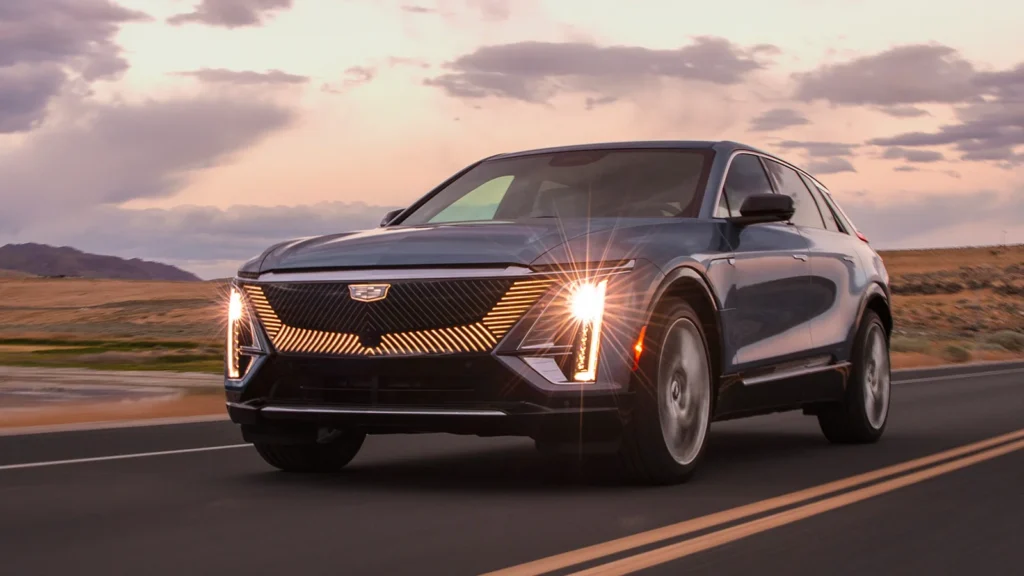
From the moment you slide behind the wheel of a Cadillac Lyriq, the question isn’t merely how fast or how far it will go, but how differently it behaves when you choose one mode over another. At its core, this question — “Do the driving modes in Cadillac Lyriq offer different ranges or battery usages?” — is about the intersection of human intention and electrical engineering in a luxury electric vehicle designed for both comfort and performance.
In a world where electric vehicles are increasingly measured in kilowatt‑hours and miles per charge rather than gallons per mile, the Lyriq’s suite of driving modes represents more than just toggles on a dashboard. These modes are entry points into a broader discussion about how performance, efficiency, environment, and driver psychology converge in the electrified era of automotive travel.
The Lyriq at a Glance: A New Era for Cadillac
Launched as Cadillac’s first fully electric SUV, the Lyriq arrives at a moment when legacy automakers are racing to redefine luxury in purely electric terms. With a battery capacity around 102 kWh and EPA‑estimated ranges north of 300 miles, it stakes its claim in a market dominated by efficiency‑obsessed brands and tech‑driven rivals. Yet range figures don’t tell the full story — because how that range is achieved depends significantly on driver choices and environmental context.
At the heart of that choice is the vehicle’s various driving modes, each calibrated to deliver a distinct blend of performance, efficiency, and traction control.
Driving Modes and the Energy Equation
In the Cadillac Lyriq, driving modes are not mere labels; they are software profiles that adjust throttle response, regenerative braking, traction interventions, and underlying control strategies that determine how the car consumes energy.
One of the clearest differences, repeatedly noted in real‑world tests and owner feedback, is between Tour (or Normal) Mode and more performance‑oriented settings like Sport Mode. Tour Mode is built for balance — a smooth throttle curve, stronger regenerative braking, and a focus on maximized range make it the default choice for everyday driving. Drivers who leave the Lyriq in this mode often see figures closer to the EPA estimates, especially when paired with features like one‑pedal driving.
By contrast, Sport Mode sharpens throttle response and relaxes some of the efficiency‑focused calibrations. The result? A more dynamic, responsive feel — but also significantly higher battery usage. Multiple sources report Sport Mode lowering real‑world range by as much as 10–15% compared to Tour Mode, and in more aggressive use cases, that gap can widen further as regenerative braking plays a lesser role.
Other modes, such as Snow/Ice, prioritize traction and stability over efficiency, adjusting throttle maps and traction control logic for slippery conditions at the cost of additional energy draw. Even temperature and road surface can subtly shift how a mode performs, meaning the same setting feels and functions differently on a winter morning than on a warm afternoon.
Table: How Driving Modes Affect Range and Usage
Below is an editorial comparison that helps visualize how different driving modes influence energy consumption and real‑world range. These figures are drawn from tests and aggregated owner reports to reflect practical, everyday outcomes — not just showroom numbers.
| Driving Mode | Purpose | Range Impact* | Best Use Case |
| Tour (Default) | Efficiency & comfort | Baseline | Daily commuting and long drives |
| Eco | Maximize efficiency | +5–10% vs baseline | City driving, highway cruising |
| Sport | Performance focus | –10–15% vs baseline | Dynamic acceleration, spirited driving |
| Snow/Ice | Traction & stability | –5–10% vs baseline | Slippery or winter conditions |
| My Mode (Custom) | Personalized balance | Variable | Tailored to driver preference |
*Range impacts are relative to baseline Tour Mode in typical conditions. Actual results vary by speed, weather, and driving style.
Beyond Modes: The Bigger Picture of EV Consumption
Even as modes provide noticeable differences, drivers and engineers both emphasize that driving behavior, speed, and environmental factors often outweigh mode selection in overall efficiency. Hard acceleration at high speeds, rapid temperature swings, or aggressive cornering can consume more battery power than simply switching from Sport to Tour.
In other words, the Lyriq’s modes are tools — but the driver’s habits remain the dominant variable in the equation. This interplay mirrors broader questions about EV adoption: efficiency isn’t just baked into technology; it’s practiced on the road.
A Human Experience Behind the Algorithms
What makes this topic resonate beyond the technical sphere is its human dimension. Choosing a driving mode isn’t just about electricity or mileage; it’s an expression of intent. Do you want calm and composed efficiency, or do you seek excitement and responsiveness? Are you optimizing for range, or for the thrill of torque?
For many Lyriq owners, the answer shifts daily, even trip to trip. A relaxed commute might favor Tour or Eco, while an impromptu scenic highway run invites Sport. These choices reflect not merely software settings but the fluid relationship drivers have with their vehicles — and with their own priorities on the move.
FAQs
1. Do different driving modes actually change the battery’s total capacity?
No — modes influence how quickly energy is used, not the battery’s physical storage capacity. They adjust performance and energy recovery behaviors, not the chemical limits of the pack.
2. Which mode offers the best range?
Tour Mode and Eco Mode generally yield the highest range results because they soften throttle response and maximize regenerative braking.
3. Does Sport Mode decrease range?
Yes. Sport Mode typically increases battery usage and can reduce real‑world range by up to 10–15% compared to efficiency‑focused modes.
4. Can custom settings (My Mode) outperform default ones?
Yes — My Mode allows drivers to combine features like high regenerative braking with gentle throttle, potentially beating baseline efficiency in specific conditions.
5. What impacts range more than driving mode?
Driver habits, outside temperature, terrain, and speed can often influence battery usage more than the chosen mode itself.
In Conclusion: A Spectrum of Control
The Cadillac Lyriq’s driving modes aren’t just functional settings — they are a language through which driver and machine converse. They influence how energy is consumed, how the vehicle responds, and ultimately how far a journey will take you. In a broader sense, they reflect a transition in automotive culture: from combustion‑centric intuition to electrified precision.In the end, the answer to the question — Do these modes offer different ranges or battery usages? — is a clear yes. But that yes is more than a statistical footnote. It’s a reminder that in the electric age, every journey becomes a dialogue between human will and the flow of electrons beneath your feet.

